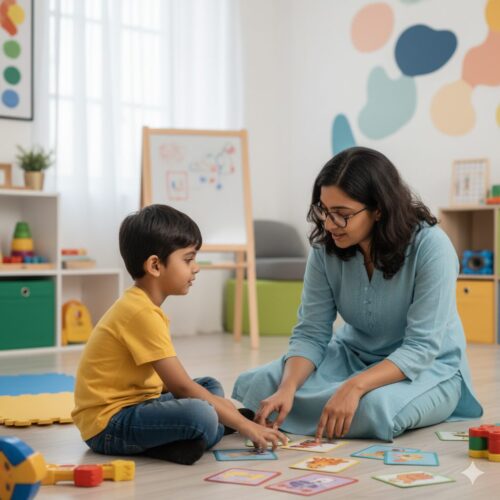
Every child’s play skills program is reviewed and fine-tuned on a weekly basis to stay aligned with their evolving needs. We focus on age-appropriate play skills that help children interact with peers and absorb new information from the world around them, because for many children, play is where learning happens most naturally.

Why Play Is One of the Most Powerful Teaching Tools We Have
Play isn’t just downtime for children, it’s how they learn to connect, communicate, and make sense of the world. For children with autism spectrum disorder (ASD), play often needs to be taught rather than assumed, which is where our play skills training comes in.
Learning Through Play, Reviewed Weekly
Understanding What Your Child Actually Enjoys
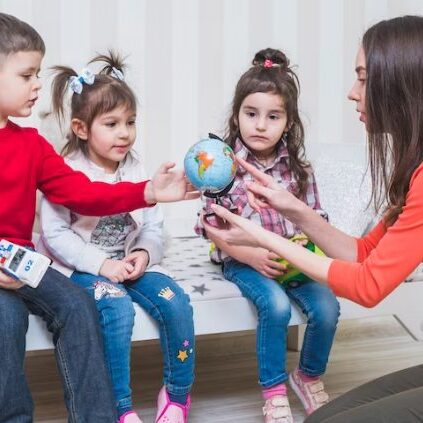
Children play differently: alone, with a parent, or in a group. Our goal isn’t to force one style of play, but to help your child feel confident and engaged across all of them, building the foundation for genuine social connection along the way.
Curious how play-based ABA therapy could support your child’s development? Reach out for a free consultation to get started.
Questions? We’re Ready to Help.
If you’d like to learn more about how our autism therapy programs can help your child, fill out our free consultation request form. One of our clinicians will walk you through our services, answer your questions about our approach, and go over costs and insurance coverage. Simple: no pressure, just clarity.